LOCAL SERVICE
Serving Philadelphia
Local plumbing service for residential and qualifying commercial properties throughout Philadelphia, PA.
Philadelphia • Professional Plumbing Service
Need sump pump installation or replacement in Philadelphia, PA? Drain State installs and replaces sump pumps for basements and lower-level areas.
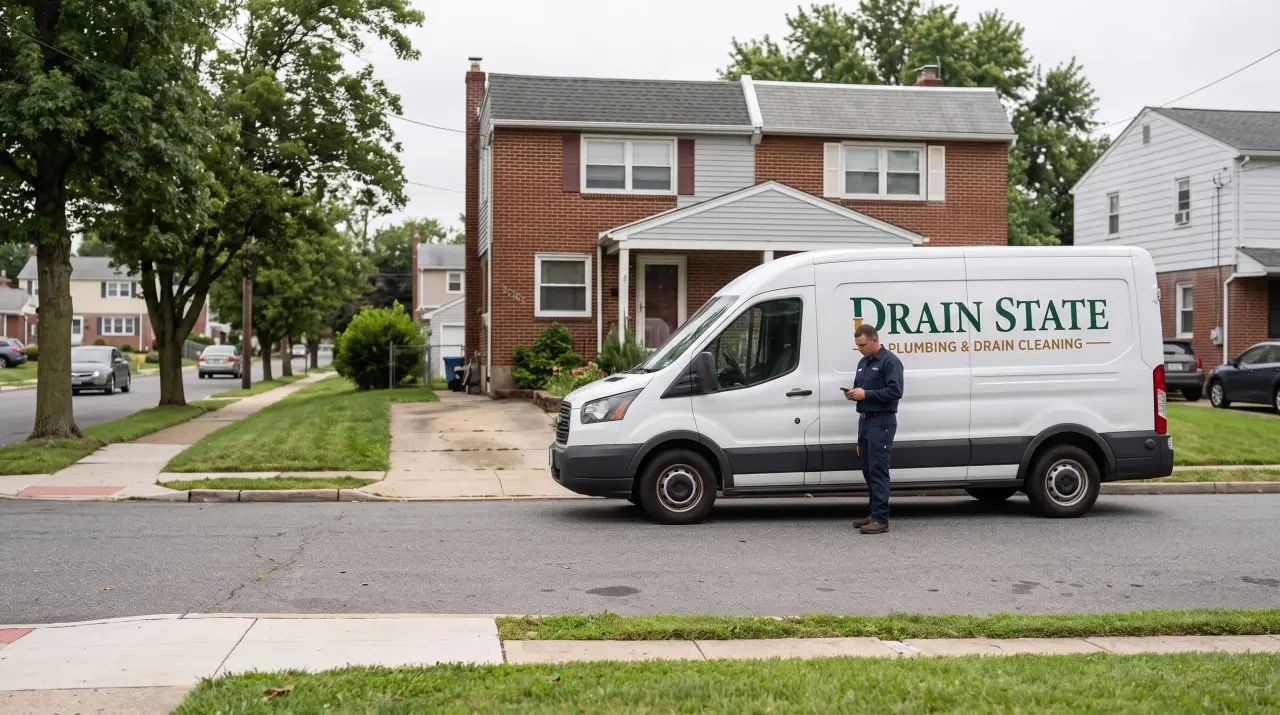
Water collecting in a basement or lower-level area can become a larger problem when there is no reliable way to remove it. Drain State provides sump pump installation and replacement in Philadelphia for properties that need collected water moved away from the building.
Some jobs involve installing a new sump pump system where one does not already exist. Others involve replacing an existing pump that has failed or is no longer dependable. The work depends on the basin, discharge piping, water entering the area, and the condition of the existing setup.
We look at the basement or lower-level area and how water reaches the sump location.
If a sump system is already installed, the pump, basin, float, discharge line, and connections are checked before deciding what needs to be replaced.
The system is set up to collect water and move it through the discharge line away from the property.
A sump pump is useful when water repeatedly reaches a basement, crawl space, or other low area and can be directed into a collection basin.
Water that repeatedly collects after rain or periods of saturated ground may need a collection and pumping system rather than temporary cleanup each time.
If water is entering the basin but the pump no longer activates or removes it, the existing unit may need replacement.
A pump that works inconsistently can leave a basement vulnerable when water flow increases during heavy rain.
If the water level continues rising while the pump is running or should be running, the pump or discharge setup needs to be checked.
Installing a sump pump where no system currently exists starts with the water problem, not the pump itself.
The sump basin needs to be placed where water can actually reach it. The pump must be able to move that water through the discharge piping, and the discharge route has to release it away from the immediate building area.
Installing a pump in a convenient location does not help if the water continues collecting somewhere else.
Basements are one of the most common locations for sump pump systems because water moves toward lower parts of a structure.
A basement sump system may receive groundwater or water directed into the basin through surrounding drainage. Once the water reaches the basin, the pump moves it through the discharge line.
A sump pump does not correct every source of basement moisture. If the water is coming from a plumbing leak, roof runoff, surface drainage, or another source, that issue may need separate work.
If water is collecting elsewhere in the basement, the path that brings water to the basin may be just as important as the pump.
An existing sump pump does not always need an entirely new drainage system when it fails.
If the basin is usable and the discharge piping is still working, replacement may focus on the failed pump and the connections required for the new unit.
If other parts of the system are damaged or preventing normal operation, those problems should be identified before simply swapping the pump.
These symptoms do not always mean the pump itself has failed. A float problem, blocked discharge line, electrical issue, or another system problem can create similar symptoms.
When replacing an existing pump, the sump basin should also be checked.
The basin needs enough space for the pump and float to operate without interference. It also needs to receive the water entering the system.
A usable basin does not need to be replaced simply because the pump is being changed.
A sump pump can be running normally and still fail to control water if the discharge line cannot carry that water away.
A restricted, damaged, or poorly routed discharge line can reduce flow or allow pumped water to return toward the building.
That is why sump pump replacement should not be treated as only removing one pump and dropping another one into the basin.
Used when a property needs a sump pump system where one is not already operating.
Used when an existing sump pump is no longer working reliably.
A sump pump and a French drain serve different roles.
A French drain collects and redirects water through a drainage system. A sump pump actively pumps water after it reaches a collection basin.
Some properties may use both systems together. A drainage system can bring water toward the sump basin, while the sump pump moves that water out of the building.
For exterior drainage problems and recurring standing water, see our French drain installation in Philadelphia.
Water in a basement does not automatically mean the property needs a new sump pump.
The water may be coming from a leaking plumbing line, fixture, exterior drainage problem, roof runoff, or another source that does not depend on the sump system.
If the water appears to be coming from a plumbing leak, see our plumbing leak detection service in Philadelphia.
If water continues entering the basin while the pump is not operating, the water level can rise until the basin overflows.
During heavy rain or higher groundwater conditions, that can happen faster because the sump may continue receiving water even though the pump is no longer removing it.
If water is actively entering the property and immediate plumbing help is needed, see our emergency plumber service in Philadelphia.
This page focuses on sump pump installation and replacement in Philadelphia.
A pump that is not working correctly should not automatically be replaced without checking the rest of the setup. A float issue, blocked discharge line, power problem, or another component may produce similar symptoms.
We do not use this page to advertise a separate sump pump repair service.
Yes. Drain State provides sump pump installation for basements and other lower-level areas where collected water needs to be pumped away.
Yes. If an existing sump pump has failed or is no longer dependable, the current system can be checked to determine whether the pump should be replaced.
Not necessarily. If the existing basin is in usable condition and works with the replacement pump, it may remain in place.
The discharge line may be restricted, the pump may not be moving enough water, or another part of the system may be preventing normal flow.
Often, yes. The basement needs a workable location for the basin and a route for moving collected water through the discharge piping.
No. A sump pump only removes water that reaches the sump basin. Plumbing leaks, exterior drainage problems, roof runoff, and other water sources may require separate work.
No. A French drain collects and redirects water. A sump pump actively removes water from a sump basin.
Philadelphia Sump Pump Service
Contact Drain State for sump pump installation and replacement in Philadelphia when your basement or lower-level area needs a reliable way to remove collected water.
Why Homeowners Call Drain State
Plumbing problems can interrupt your entire day. We focus on clear communication, dependable workmanship, and practical solutions for properties throughout Philadelphia.
Local plumbing service for residential and qualifying commercial properties throughout Philadelphia, PA.
When a serious leak, backup, or other urgent plumbing problem cannot wait, Drain State is available for emergency service.
We explain the problem, discuss the available repair options, and help you make an informed decision about your plumbing system.
Drain State Plumbing & Drain Cleaning
Get in touch with Drain State for professional plumbing service and a straightforward estimate for your property.