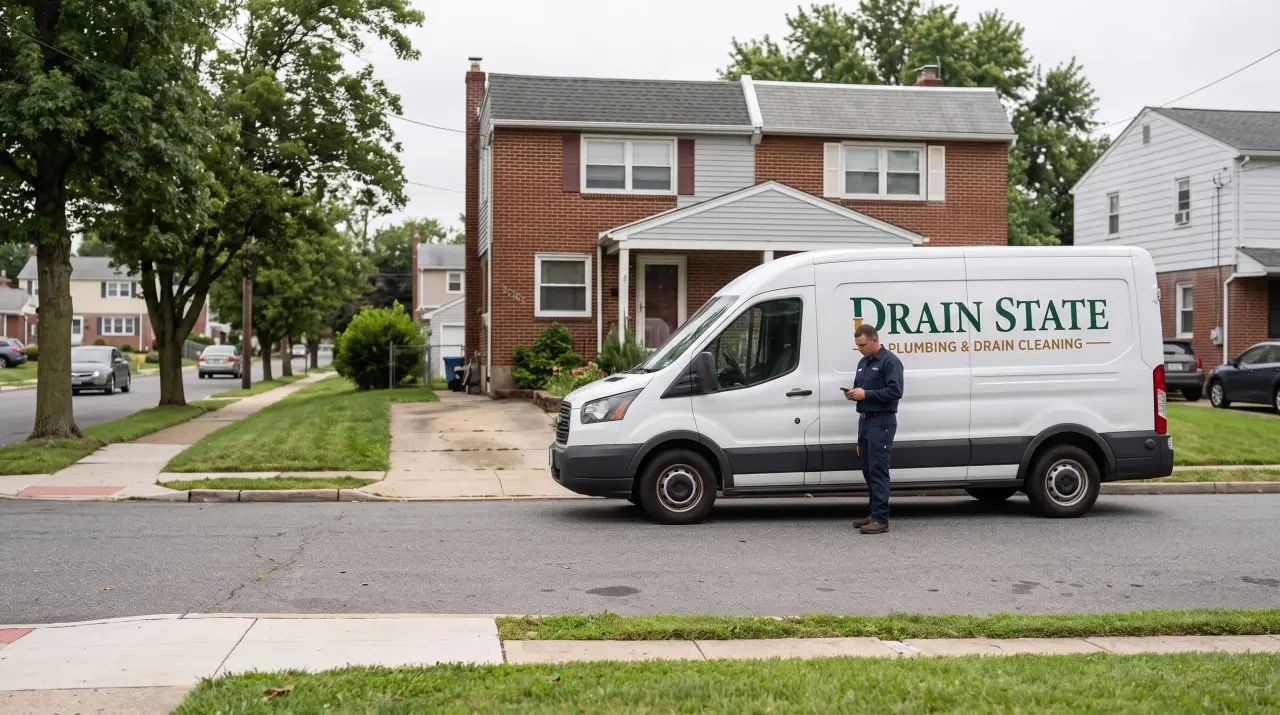
French Drain Installation
Water that repeatedly collects in the same part of a property usually needs somewhere
better to go. Drain State provides French drain installation for
properties dealing with standing water, recurring wet areas, poor exterior drainage,
and water that consistently moves toward areas where it should not collect.
A French drain is designed to collect water along a drainage path and redirect it toward
a suitable discharge point. The important part is not simply burying perforated pipe.
The system has to be placed where it can intercept the water and move it in a useful
direction.
01
See Where the Water Collects
We start with the wet area, the direction water is moving, and when the problem usually appears.
02
Plan the Drainage Path
The drain needs a route that intercepts the water and carries it toward a usable outlet.
03
Install the French Drain
The trench, drainage material, pipe, slope, and outlet all need to work together as one system.
When a French Drain May Help
A French drain is most useful when excess water repeatedly moves through or across the
same area and there is a practical way to collect and redirect that water.
01
Standing Water in the Yard
Water that remains in low areas after rainfall can indicate that the property is not
draining efficiently.
02
Recurring Wet Areas
Sections of a yard that stay wet long after surrounding areas have dried may benefit
from a drainage path that intercepts excess water.
03
Water Moving Toward the House
If surface or subsurface water consistently moves toward the building, drainage may
be needed to redirect it before it reaches the problem area.
04
Poor Exterior Drainage
Some properties do not shed water well because of low areas, limited slope, or the
way water moves across the site.
05
Water Near a Foundation
Repeated water accumulation near a foundation may justify improving exterior drainage,
depending on where the water is coming from.
06
Drainage Problems After Rain
A problem that appears repeatedly during or after rainfall can help show where water
is entering the area and how it is moving across the property.
How a French Drain Works
A French drain creates a path for water to enter a gravel-filled trench and move through
drainage piping toward an outlet.
The system works best when it is placed along the route where water is already traveling
or where it can intercept water before it reaches the area that stays wet.
That means location matters. Installing a drain where the water never reaches it will not
solve the original drainage problem.
✓
A French drain needs somewhere to discharge.
Collecting water is only part of the job. The system also needs a practical path for
moving that water away from the area where it is causing trouble.
Exterior French Drain Installation
Exterior French drains are commonly used to manage water moving through yards, along
sloped areas, near buildings, or across sections of a property that repeatedly stay wet.
The drain is usually positioned where it can intercept that water before it continues
into the affected area.
An exterior system may involve a trench, drainage stone, perforated pipe, filter material,
and a discharge route. The exact layout depends on how water moves across the property and
where it can be redirected.
French Drain Installation in a Yard
A yard French drain can help when one part of the property repeatedly holds water while
surrounding areas drain more normally.
The first thing to understand is why that area stays wet. Water may be flowing downhill,
collecting in a low area, moving through saturated soil, or arriving from another part of
the property.
The drain should be positioned around that movement rather than installed in an arbitrary
straight line simply because the ground is wet.
How We Approach French Drain Installation
01
Start with the water
Identify Where the Drainage Problem Begins
We look at where water appears, what areas stay wet, and whether the problem follows
rainfall, runoff, or another repeatable pattern.
02
Follow the direction of flow
Determine Where the Drain Should Intercept the Water
The drainage path should be placed where it can collect water before that water reaches
the area causing the problem.
03
Plan the outlet
Give the Water Somewhere to Go
A French drain needs a workable discharge route. The outlet is part of the system,
not an afterthought.
04
Build the drainage path
Install the Trench, Pipe & Drainage Material
The trench, drainage stone, perforated piping, filter material, slope, and outlet are
installed so water can enter the system and move away from the problem area.
Why Slope Matters
A French drain still depends on gravity. Water entering the system needs a usable path
toward the discharge point.
A drain that collects water but cannot move it away can leave the system saturated and
limit how well it performs.
That is why the elevation of the wet area, drain route, and outlet all matter before the
trench is installed.
Why the Outlet Matters
The outlet determines where collected water ends up.
A French drain should not simply move water from one problem area into another. The
discharge route needs to be considered as part of the installation from the beginning.
If there is no practical place for the system to release water, another drainage approach
may make more sense.
French Drain Around a Foundation
Water repeatedly collecting near a foundation can be a reason to look at exterior
drainage, but the source of the water still matters.
A French drain may help when water is moving through the soil or across the property
toward the foundation and there is a way to intercept and redirect it.
It will not correct every source of basement or foundation moisture. Water can enter a
building for different reasons, so the visible wet area alone does not tell the whole story.
Can a French Drain Help With Basement Water?
Sometimes, but it depends on where the water is coming from.
If exterior drainage is allowing water to collect around the building, redirecting that
water may reduce the amount reaching the affected area. But basement water can also involve
plumbing leaks, groundwater, sump system problems, or other sources.
A French drain should not be installed just because a basement is wet. The drainage problem
needs to match what the system is designed to do.
!
A wet basement does not automatically mean you need a French drain.
Before installing exterior drainage, it helps to understand whether the water is
coming from outside, from the plumbing system, from groundwater, or from another source.
French Drain vs. Sump Pump
A French drain and a sump pump can both be part of water management, but they do different
jobs.
A French drain collects and redirects water through a drainage path.
A sump pump actively pumps water out of a collection area after the water
has reached the sump.
Depending on the property, one may be useful without the other. In some drainage setups,
both systems can work as different parts of the same water-management plan.
For pump-specific work, see our
sump pump installation service.
French Drain vs. Surface Drainage
Not every water problem requires a French drain.
If water is moving primarily across the surface, grading, downspout routing, catch basins,
or another surface-drainage approach may sometimes address the problem more directly.
A French drain is more useful when water needs to be intercepted along a buried drainage
path rather than simply collected from one visible surface point.
When a French Drain May Not Solve the Problem
A French drain will not fix a drainage problem if it is installed in the wrong place or
if the water source has nothing to do with the area the system can reach.
Examples include:
- A plumbing leak inside the building
- A roof or gutter problem sending water to the wrong area
- Water collecting somewhere with no usable discharge route
- A wet area caused by something other than exterior drainage
- A drainage path that does not intersect the actual movement of water
The useful question is not whether a French drain can be installed. It is whether placing
one in that location will actually intercept the water causing the problem.
French Drain Installation Near Existing Landscaping
Existing landscaping, walkways, structures, utilities, and property layout can affect
where a drain can reasonably be installed.
A direct path on paper is not always the best path in the yard. The route has to work with
the available elevation and provide a discharge point without creating another drainage
problem elsewhere.
What Makes a French Drain Effective?
Several parts of the installation have to work together:
- The drain must be located where water can reach it
- The trench needs a usable slope
- The piping has to carry the expected water flow
- The surrounding drainage material must allow water into the system
- The system needs protection from soil entering the drainage path
- The outlet needs to release water somewhere that makes sense
Missing one of those pieces can limit how well the drain handles the original water
problem.
French Drain Installation vs. French Drain Repair
This service focuses on new French drain installation for drainage
problems that need a new path for collecting and redirecting water.
If an existing French drain is no longer working correctly, the first step is to understand
what has changed before assuming that a new system is required.
That may involve the outlet, accumulated material, damage, changes around the property, or
another drainage issue, but repair work is not the primary focus of this service page.
Frequently Asked Questions About French Drains
What is a French drain?
A French drain is a buried drainage system designed to collect water through a
gravel-filled trench and perforated pipe and redirect that water toward a discharge
point.
When should I consider French drain installation?
A French drain may make sense when water repeatedly collects in the same area, a yard
stays wet after rainfall, or exterior water consistently moves toward an area that needs
better drainage.
Can a French drain help with standing water in a yard?
Yes, when the drain can be positioned to intercept the water and there is a practical
place to redirect it. The cause and movement of the water should be considered first.
Does a French drain need a slope?
Yes. The system relies on gravity to move collected water toward the discharge point,
so the drain route needs a usable change in elevation.
Where does water from a French drain go?
Water travels through the drain toward an outlet or discharge area. The available
outlet depends on the property and should be considered before installation begins.
Can a French drain keep water out of a basement?
It can help in some situations where exterior drainage is contributing to water near
the foundation. Basement water has several possible causes, so a French drain is not
automatically the answer to every wet basement.
Is a French drain the same as a sump pump?
No. A French drain collects and redirects water through a drainage path. A sump pump
actively pumps collected water away from a sump basin or similar collection area.
Can a French drain be installed outside?
Yes. Exterior French drains are commonly used for yard drainage, recurring wet areas,
and water moving through or around parts of a property.
Does every wet yard need a French drain?
No. The right drainage method depends on where the water comes from, how it moves,
and whether a French drain can intercept it and carry it to a workable outlet.
Do you provide French drain repair?
This page focuses on new French drain installation. If an existing system is not
draining correctly, the cause should be identified before deciding whether cleaning,
repair, modification, or a different drainage approach is needed.
French Drain Installation
Water Keep Collecting in the Same Area?
Contact Drain State when standing water, recurring wet areas, or poor exterior drainage
suggest that the property may need a dedicated path for collecting and redirecting water.