Professional • Reliable • 24/7 Support
Professional Pipe Repair
Drain State provides professional pipe repair for leaking, burst, cracked, corroded, and damaged plumbing pipes. We identify the source of the problem and determine the appropriate repair for the affected section.
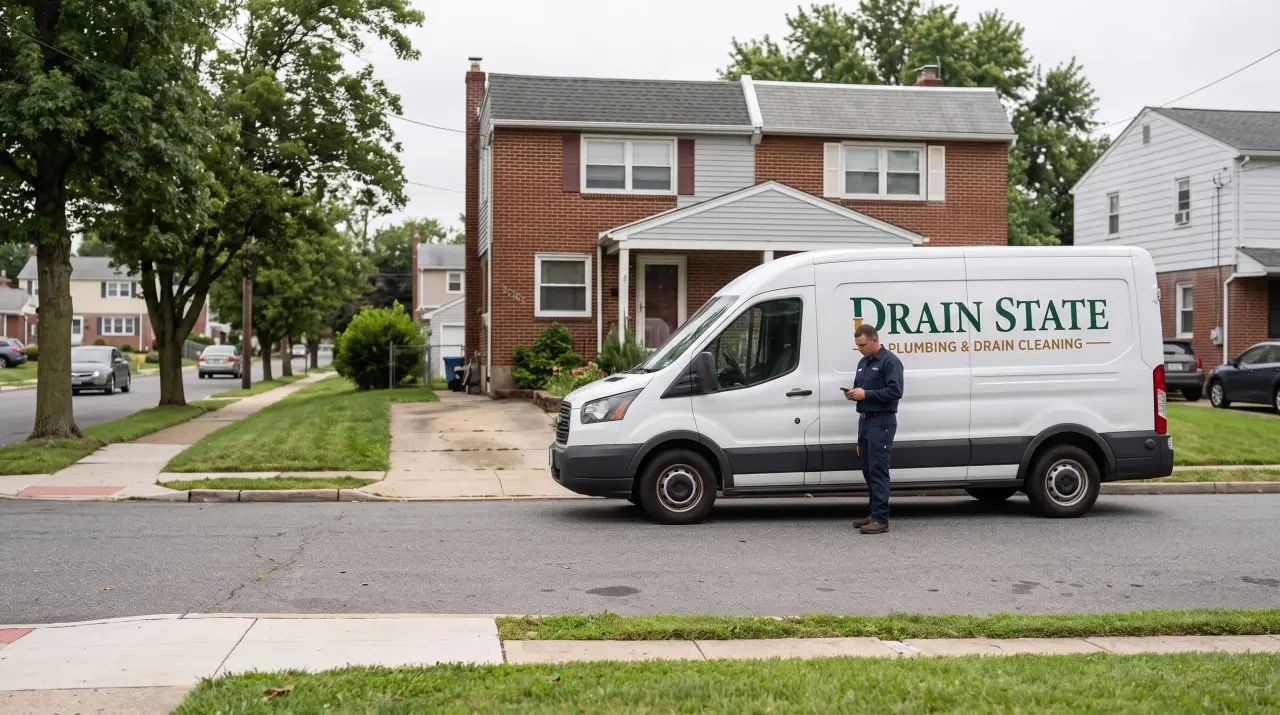
Professional Pipe Repair
Drain State Plumbing
Drain State provides professional pipe repair for leaking, burst, cracked, corroded, and damaged plumbing pipes. We identify the source of the problem and determine the appropriate repair for the affected section.
Pipe Repair
A leaking, cracked, corroded, or burst plumbing pipe can cause water damage quickly and may continue getting worse if the affected section is left untreated.
Drain State provides professional pipe repair for damaged water pipes, leaking pipe joints, burst piping, corrosion, and other common plumbing pipe problems.
We start by identifying where the problem is located and what condition the pipe is in before deciding whether a localized repair or a larger section of piping needs attention.
We determine where the leak, damage, or failure is occurring and whether the visible symptom points to one section of pipe or a broader plumbing issue.
The condition of the affected pipe, fitting, joint, and surrounding plumbing helps determine whether a targeted repair makes sense.
Once the source and extent of the problem are understood, the damaged section or connection can be repaired or replaced as appropriate.
Common Pipe Problems We Repair
Pipe failures do not all look the same. Some begin as a slow leak at a joint, while others involve a cracked section, corrosion, or a sudden burst that releases water rapidly.
Leaking Pipes
Water dripping or seeping from a pipe may come from a damaged section, fitting, joint, connection, or another weak point in the plumbing system.
Burst Pipes
A burst pipe can release a significant amount of water and may require immediate attention to control the leak and repair the damaged piping.
Cracked Pipes
Cracks can allow water to escape slowly or rapidly depending on the location and severity of the damage.
Corroded Pipes
Corrosion can weaken piping over time and may eventually lead to leaks, restricted flow, pinhole failures, or deterioration around fittings and joints.
Leaking Pipe Joints
Connections between sections of pipe can begin leaking because of wear, movement, deterioration, or failure at the fitting.
Damaged Interior Water Pipes
Pipes inside walls, ceilings, basements, utility spaces, and other parts of a property can develop leaks that require professional evaluation and repair.
Signs You May Need Pipe Repair
Some pipe problems are immediately visible. Others first appear through changes in the property or plumbing system.
Common signs that may justify further inspection include:
- Visible water leaking from a pipe
- Water stains on walls or ceilings
- Damp areas around exposed plumbing
- Unexpected moisture in cabinets or utility spaces
- A sudden drop in water pressure
- Recurring leaks from the same section of piping
- Visible corrosion around pipes or fittings
- Water sounds when fixtures are not being used
- An unexplained increase in water use
These symptoms can have more than one possible cause, so the location of the actual leak should be confirmed before deciding what needs to be repaired.
Water can travel along framing, piping, or other surfaces before it becomes visible. When the source is not obvious, identifying the leak location is an important part of choosing the right repair.
How We Approach Pipe Repair
The right repair depends on what failed, where the problem is located, and whether the damage is limited to one section of the plumbing system.
Identify Where the Problem Appears
We look at where water is appearing, when the leak occurs, which plumbing fixtures are affected, and whether the problem is active or intermittent.
Locate the Leak or Damaged Section
Visible piping, fittings, nearby plumbing connections, and the surrounding area can be evaluated to narrow down the source of the problem.
Determine the Scope of the Repair
A localized failure may only require attention to one section or connection, while broader deterioration may justify replacing more of the affected piping.
Restore the Pipe and Test the Area
After the affected piping is repaired, the plumbing is checked for normal operation and visible leakage around the repaired section.
Leaking Pipe Repair
A leaking pipe may release only a small amount of water at first, but continued moisture can damage surrounding materials and allow the condition of the pipe to worsen.
The leak may come from the pipe wall itself, a joint, a fitting, or a nearby connection. Before selecting a repair, the source and condition of the affected piping should be identified.
For leaks where the source is not obvious, see our plumbing leak detection service.
Burst Pipe Repair
A burst pipe is a more urgent plumbing problem because water can escape quickly and spread through walls, ceilings, flooring, basements, or other parts of the property.
The immediate priority is controlling the water when it can be done safely and determining which section of piping has failed.
Once the damaged area is accessible and the extent of the failure is understood, the affected section can be repaired or replaced as appropriate.
If water is escaping rapidly or actively damaging the property, shut off the appropriate water supply if it is safe to do so and contact Drain State for emergency plumbing service.
Cracked Pipe Repair
A crack in a plumbing pipe can allow water to escape whenever that section is under pressure or being used.
The appropriate repair depends on the pipe material, the location of the crack, and whether the surrounding pipe remains in serviceable condition.
A single damaged section may sometimes be repaired locally. If deterioration extends beyond the visible crack, a larger section may need attention.
Corroded Pipe Repair
Corrosion can weaken plumbing pipes and fittings gradually. Early signs may include staining, surface deterioration, moisture around a connection, or small recurring leaks.
If corrosion is limited to one connection or section, a targeted repair may be possible. If several nearby areas show similar deterioration, the overall condition of that piping should be considered before another isolated repair is made.
Pipe Joint and Fitting Leaks
Not every pipe leak comes from a hole in the middle of the pipe. Water can also escape where pipes connect to elbows, tees, valves, couplings, or other fittings.
A joint leak should be checked to determine whether the fitting itself has failed, the pipe has deteriorated near the connection, or movement has affected the joint.
Repairing only what is visibly wet may not solve the problem if the actual failure begins slightly farther along the connection.
Pipe Repair Inside Walls and Ceilings
A plumbing leak behind a wall or above a ceiling may first appear as staining, bubbling paint, damp drywall, or water dripping from an opening away from the actual pipe failure.
Because water can move before it becomes visible, the wettest area is not always directly below the source.
When the leak location is uncertain, it may make sense to identify the source before opening more of the surrounding structure than necessary.
Pipe Leaks Under Sinks
Water under a kitchen or bathroom sink can come from several nearby components, including water supply piping, faucet connections, shutoff valves, or drainage piping.
The area should be checked while the fixture is being used so the source can be distinguished from water traveling down from another connection.
If the problem is specifically connected to the faucet, see our faucet repair service.
Pipe Repair vs. Water Line Repair
Pipe repair and water line repair overlap, but they are not always the same service.
This page focuses on leaking, burst, cracked, corroded, and otherwise damaged plumbing pipes within the property's plumbing system.
If the problem involves the main water service line supplying the property, see our water line repair service.
Pipe Repair vs. Slab Leak Repair
A leaking pipe beneath a concrete slab requires a different diagnostic approach from a visible pipe leak in a basement, utility room, wall, or ceiling.
If the symptoms suggest that water is escaping from piping below a slab or concrete floor, see our slab leak detection and repair service.
Localized Pipe Repair vs. Replacing More Pipe
A damaged plumbing pipe does not automatically mean an entire piping system needs to be replaced.
When the failure is isolated and the nearby piping remains in reasonable condition, repairing or replacing the affected section may be appropriate.
A larger replacement may become more practical when several nearby sections are deteriorated, the same pipe has failed repeatedly, or repairing one area would leave other obvious weak sections in place.
The scope should be based on the actual condition of the piping rather than assuming every leak needs the same solution.
Recurring Pipe Leaks
If the same section of plumbing has been repaired more than once, or several leaks begin appearing along the same run of pipe, the pattern matters.
A recurring leak can indicate that the problem is no longer limited to one fitting or isolated spot. The condition of the surrounding piping should be evaluated before simply repeating the previous repair.
Low Water Pressure and Pipe Problems
Low water pressure does not automatically mean a pipe needs repair. A single fixture can have a local restriction, while pressure problems affecting several fixtures may involve another part of the water supply system.
However, a sudden pressure change combined with visible leakage, unexplained water use, or other signs of a plumbing failure may justify checking the piping for damage.
Frozen and Burst Pipe Problems
Cold conditions can place plumbing pipes at risk when water inside the line freezes and expands.
A pipe may not begin visibly leaking until the frozen section thaws and water pressure returns to the damaged area.
If a pipe has frozen, visible cracks, active leakage, or water damage after thawing should be evaluated before normal use continues.
When Pipe Repair Is an Emergency
Not every small plumbing leak requires emergency service, but some pipe failures should be addressed immediately.
Urgent situations can include:
- A burst pipe releasing water rapidly
- Water spreading through walls or ceilings
- A leak that cannot be controlled
- Water reaching electrical equipment or other hazardous areas
- A plumbing failure causing significant active property damage
For an active plumbing emergency, contact our 24/7 emergency plumber service.
For a stable pipe problem that still needs attention today, see our same-day plumbing service.
Pipe Repair and General Plumbing Repairs
Pipe damage can sometimes be part of a larger plumbing problem involving valves, fixtures, water supply connections, or other components.
For broader plumbing issues that are not limited to a specific damaged pipe, visit our plumbing repair service.
Pipe Repair Service Area
Drain State provides pipe repair and related plumbing services throughout Philadelphia and surrounding communities, including Bucks County, Montgomery County, Delaware County, Bensalem, Newtown, Warminster, Northeast Philadelphia, and nearby service areas.
Frequently Asked Questions About Pipe Repair
How do I know if I have a leaking pipe?
Visible water, damp areas, wall or ceiling stains, recurring moisture, water sounds, and unexplained changes in water use can all be possible signs. The actual source should be confirmed because water can travel away from the damaged pipe before becoming visible.
Can a leaking pipe be repaired without replacing the whole line?
Often, yes. If the damage is limited to one section and the surrounding piping remains serviceable, a localized repair or section replacement may be appropriate.
What should I do if a pipe bursts?
If it can be done safely, shut off the appropriate water supply to reduce additional leakage and contact a plumber. Avoid entering areas where water may create an electrical or other safety hazard.
Why does the same pipe keep leaking?
Repeated leaks can mean the problem is no longer limited to one isolated fitting or weak point. The surrounding section of piping may need to be evaluated before another localized repair is made.
Can corrosion cause a pipe to leak?
Yes. Corrosion can weaken certain plumbing pipes and fittings over time and may eventually contribute to pinhole leaks, joint problems, or larger failures.
Why is water showing up far away from the pipe?
Water can travel along framing, piping, ceilings, walls, and other building materials before it becomes visible. That is why the visible wet spot does not always identify the exact source.
Is low water pressure a sign of a broken pipe?
It can be one possible symptom, but low pressure has several other causes. A sudden pressure change combined with leakage or other signs of water loss may justify checking the plumbing system for damage.
What is the difference between pipe repair and water line repair?
Pipe repair can involve damaged plumbing piping throughout the property. Water line repair generally refers more specifically to the water service line supplying the property from the exterior water source.
Is a pipe leak an emergency?
A small controlled leak may not always require emergency service. A burst pipe, uncontrolled water flow, or active water damage should be treated more urgently.
Do you provide pipe repair in Philadelphia?
Yes. Drain State provides professional pipe repair in Philadelphia and surrounding communities.
Professional Pipe Repair
Leaking, Burst, or Damaged Pipe?
If you have a leaking pipe, burst pipe, cracked section, corroded fitting, or another plumbing pipe problem, contact Drain State to identify the source and determine the appropriate repair for the affected piping.
Drain State Plumbing
Need pipe repair?
Contact Drain State for professional plumbing service, straightforward pricing, and help with your plumbing needs.